 Overwatch
Overwatch uses a special ranking system for players who want to compete and get better. The way ranks work has changed over time, and now you can see your rank progress after every match in the new season. This update helps players know how close they are to moving up. If you find it hard to climb to higher ranks, you can use an Overwatch boosting service to help you reach your goal.
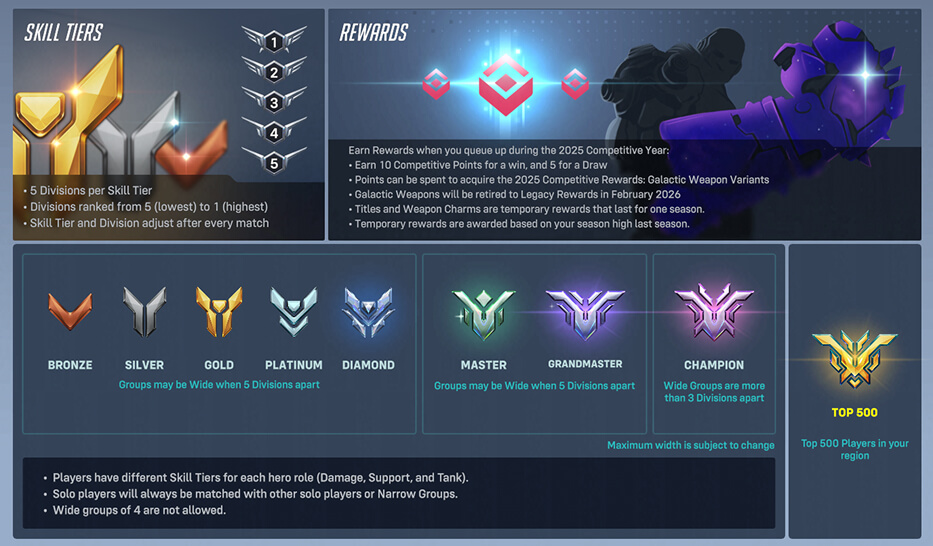
Overwatch uses a competitive ranking system to match you with players at a similar skill level. When you start, you play placement matches to find out your first rank. Winning many games in a row can help you climb to a higher rank, but losing several games can drop you down.
Your skill rating (SR) also depends on ranked modifiers, which look at how well you play in each match. There are eight main ranks, each with five divisions, plus a special Top 500 group for the very best players.
To unlock competitive mode, you need to play 50 normal games, unless you owned Overwatch 1—in that case, you get instant access. After you get your first rank, you can check your Career Profile to see your medal, rank, and progress.
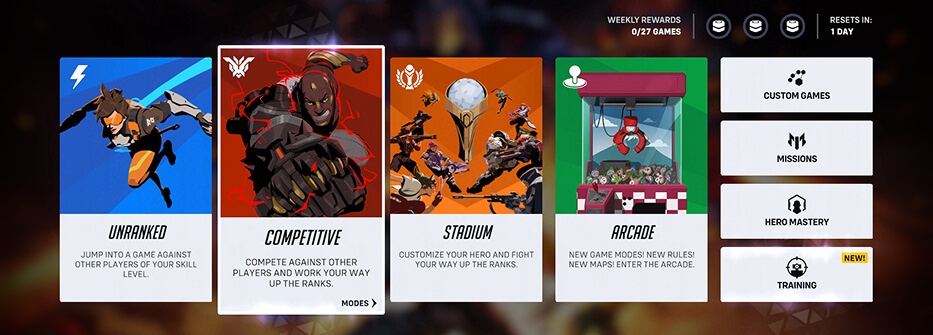
Overwatch has different ways to play competitively:
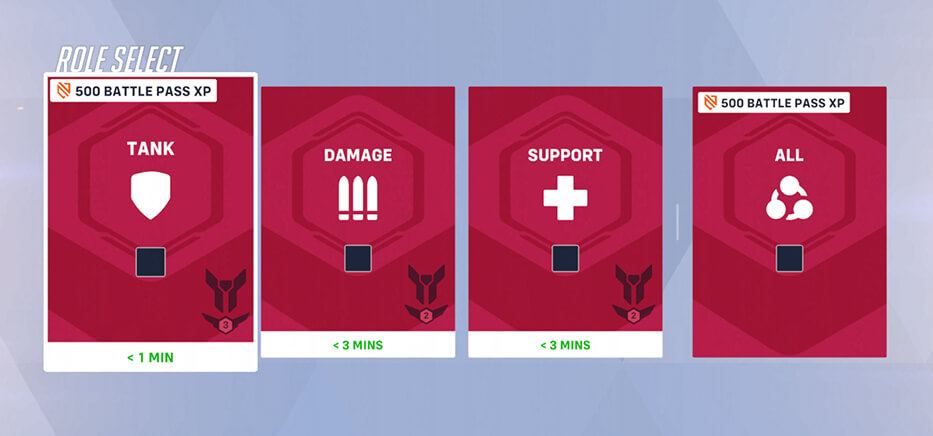
In this main mode, each team has 5 players: 1 Tank, 2 Damage, and 2 Support. You choose your role before the game, and can only play heroes from that role during the match. Players have three separate ranks, one for each role.
Here, each team has 6 players and you can pick any hero. Teams can have up to 2 Tanks at the same time, but no limits for Damage or Support. Players can switch heroes and roles anytime. You get one overall rank in this mode.
Special modes appear sometimes, like Competitive Mystery Heroes (random heroes every round), Team Queue (groups of five with no rank limits), Lúcioball, and Capture the Flag. Rewards for these modes are different and usually lower than regular Competitive rewards.
You must play placement matches for each mode to earn your first rank. Each mode offers a new way to test your skills and have fun in Overwatch Competitive play.
If you played Overwatch 1, you already have access to ranked games.
For new Overwatch players, you need to do three things:
After you finish these steps, you can play ranked in both Role Queue and Open Queue.
MMR stands for matchmaking rating. It is a hidden number that Overwatch uses to match you with other players who have similar skill. You cannot see your exact MMR, and it is not always the same as your visible rank.
Your MMR goes up when you win games against players at your skill level. It goes down when you lose. Only winning and losing changes your MMR. Your MMR does not drop just because your rank is lowered at the start of a new season.
In both ranked and quick play, Overwatch uses MMR to make fair teams. The matchmaker always tries to find players who are close to your MMR, so every game feels balanced.Your MMR can also change over time, even if you do not play, because other players get better or worse. To improve your MMR, try to win games, work with your team, and have fun. If you keep getting better, both your MMR and your rank should go up.
Hero bans are part of Overwatch’s competitive play starting in Season 16. Before each match, both teams can ban up to two heroes each (for a total of four bans), with no more than two heroes banned per role.

Season 10 introduced new rank modifiers to Overwatch. After every competitive match, you can see a progress bar that shows how close you are to your next rank. The bar also shows a percentage, so you know exactly how much you’ve moved up or down after each game.
Rank modifiers can change how fast you move through the ranks. They look at things like winning streaks, losing streaks, and other factors to decide your progress. Here are some of the main rank modifiers:
These modifiers help make the ranking system more fair and show you exactly how your games affect your rank.
Overwatch now uses a new competitive system with a yearly rank reset. Every year, all players start fresh and must complete placement matches to get a new rank. Unlike before, your rank now updates after every game instead of every few wins or losses. This way, you get instant feedback after each match.
A progress meter shows how close you are to moving up or down after every match. This helps you see how your performance affects your rank. The Champion rank has also been added above Grandmaster for the best players.
With the full rank reset, players with different skill levels are now closer together in rank. This means you might play games with people who finished much higher or lower last season. It takes time for everyone’s rank to settle back to normal, since every player needs to play a lot of matches for the system to find the right rank. That is why you might notice a bigger mix of skill levels in your games right after the reset.
Winning a ranked match gives 10 Competitive Points, and a draw gives 5 points. Losses give no points.
The new Competitive Progression Bar tracks your matches. Each win adds 3 progress points, while draws and losses add 1 point each. When the bar reaches 30 points, you get an extra 100 Competitive Points, up to 3000 extra points per season.
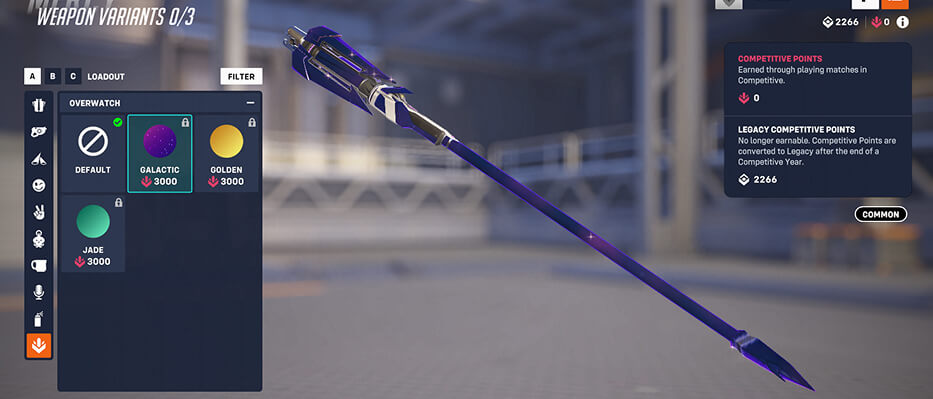
Competitive Points can be used to unlock special weapon variants like Golden, Jade, or Galactic weapons. Each weapon costs 3000 points.
Besides Jade and Golden weapon skins, players can now earn special competitive titles at the end of each season. To get a title, you must finish the season at Gold rank or higher. Titles are given for each role: Tank, Damage, Support, and Open Challenger. The title you get depends on your best rank for the season.
There are also special titles for playing lots of games:
Starting in Season 12, a new event called Competitive Drive lets players earn a Competitive Signature. This adds a special look to your BattleTag. The more Drive points you earn during the event, the better your Signature will be.
Here’s how Overwatch players are spread across the different ranks. Most people are in the middle, while only a few reach the top levels.
Most players are found in Silver, Gold and Platinum, while only a small group makes it to Master, Grandmaster, Champion.
Want to rank up in Overwatch? Try these tips:
Check your rank screen often to see your progress. Remember, the best way to climb is to keep learning, play as a team, and be patient. But if you ever feel stuck or want to reach your goal much quicker, you can always use our professional Overwatch boosting to rank up faster and skip the grind!
Overwatch has 9 ranks. From lowest to highest, they are: Bronze, Silver, Gold, Platinum, Diamond, Master, Grandmaster, Champion, and Top 500.
First, you play 10 placement matches to get your starting rank. After that, every ranked game you play can move your rank up or down, depending on if you win or lose. At the end of each season, everyone’s ranks are reset, and you can start fresh in the next season.