 Valorant
Ever told yourself, "Just one more game before bed," only to see the sun peeking over the horizon? If so, you're not alone. As a seasoned Valorant player who’s witnessed everything from 15-minute stomps to exhausting, hour-and-a-half overtime slogs, I know exactly how elusive time becomes in Riot’s iconic tactical shooter. Whether you’re an eager newcomer, a veteran climbing the ranks, or a busy gamer trying to squeeze in a match between real-life responsibilities, knowing how long a Valorant game really lasts is essential.
This comprehensive, expert-level guide explores every aspect of match durations in Valorant as of 2025. We’ll cover average and maximum game times by mode, the mechanics behind round length, the real-world factors that make games run long or short, and how to master time management to make the most of your session.
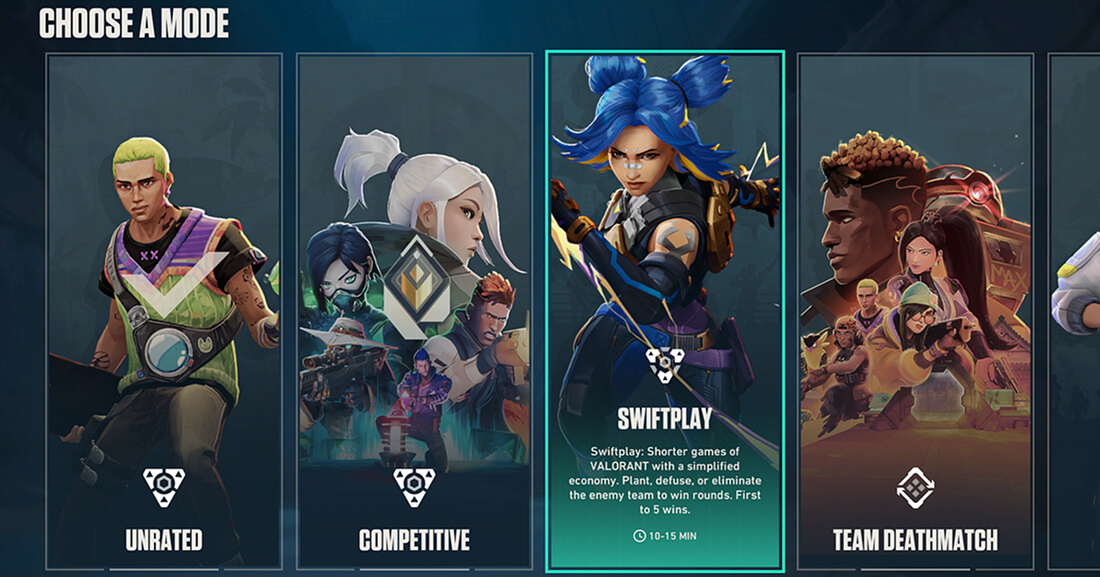
Before we wade into the nitty-gritty details, here’s an at-a-glance chart of average and maximum match lengths by mode in 2025:
| Game Mode | Average Duration | Max Possible |
|---|---|---|
| Premier | 37–42 min | 52 min |
| Competitive | 30–40 min | 80+ min* |
| Unrated | 30–40 min | 80+ min* |
| Swiftplay | 10–20 min | 20 min |
| Spike Rush | 8–15 min | 15 min |
| Deathmatch | 8–10 min | 11:30 min |
| Team Deathmatch | 8–10 min | 10 min |
| Escalation | 7–13 min | 13 min |
| Replication | 9–12 min | 20 min |
| Snowball Fight | N/A | 50 kills (limit) |
*Rare, overtime-heavy matches have exceeded 90 minutes.
A Valorant match is a tapestry of unpredictability, woven from the interplay of skill, strategy, and sometimes chaos. Here’s what actually affects how long you’ll be in-game:
If your squad absolutely outclasses the opposition (think a ruthless 13–0 sweep), matches can conclude in a brisk 15–20 minutes.
Evenly-matched teams create the marathon sessions that Valorant is famous for. Games can push right up against the maximum time limit, especially if every round goes to the wire.
Clutch players who wait until the final seconds to plant the Spike can stretch round timers, adding precious minutes over the course of a close match.
Server problems, player disconnects, lag spikes, or technical hiccups can extend (or abbreviate) matches unpredictably.
The average duration of a Valorant match isn’t just about the mode — it’s also about your rank. The chart below illustrates how average game length varies by rank:
Average game length by rank/tier. Match times tend to increase as you climb the competitive ladder, peaking in the Platinum-Diamond range, and then decrease again at the very top ranks.
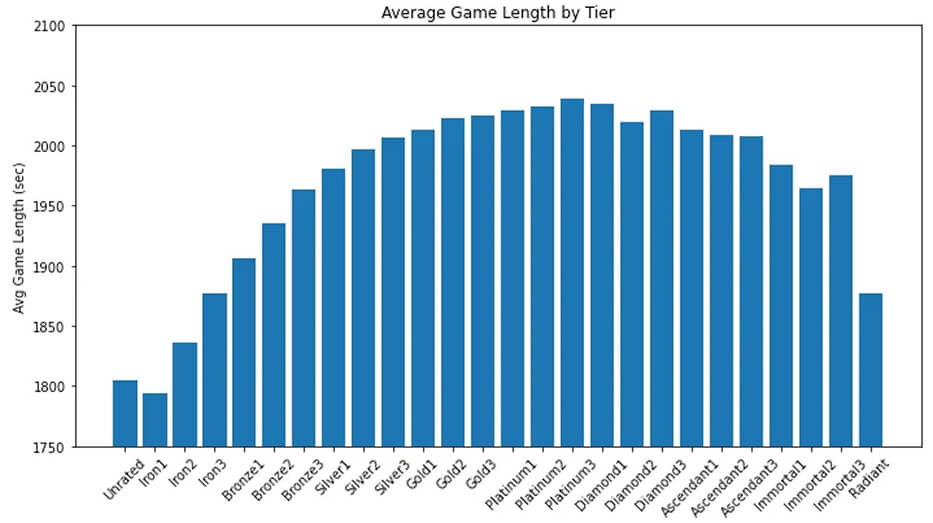
This pattern suggests that mid and high-level ranked games are more likely to go the distance due to balanced matchmaking, while the very top and very bottom ranks see more decisive victories.
Let’s break down how each game mode in Valorant operates in terms of structure and timing, and what to expect as a player in 2025.
Competitive remains the gold standard for ranked Valorant play, and it’s here where match duration is at its most variable.
If both teams reach 12–12, competitive matches enter overtime. Each overtime consists of two rounds; you need to win both on attack and defense to claim victory. If still tied, more overtimes ensue — pro games have been known to reach more than 14 overtime cycles!
Premier represents the apex of organized Valorant outside professional tournaments. Assemble your squad (5–7 players) and battle for leaderboard glory.
Unrated mirrors Competitive in structure, minus the stress of rank gains or losses.
Swiftplay is Valorant’s answer to the time-crunched player, offering a taste of tactical play without a massive time investment.
A fast, chaotic take on Valorant that strips away the drawn-out tactics for pure fun.
For sharpening your aim or engaging in pure combat.
Deathmatch
Team Deathmatch
Riot’s “gun game” mode, where teams must progress through a preset arsenal of weapons and abilities.
An unpredictable mode where everyone on a team plays as the same agent.
A limited-time, festive brawl.
Understanding how match duration is constructed round by round gives insight into why games last as long as they do.
A full-length, regulation match (25 rounds, 13–12 score, no overtime) generally lasts about 40 minutes when accounting for transitions, pauses, and post-round time.
Valorant's open-ended overtime mechanic has produced some legendary endurance tests. The longest recorded competitive match belongs to B4 Esports vs No2B e-Sports during the First Strike: Brazil Closed Qualifier on November 13, 2020. Their Ascent map stretched to an unprecedented 58 rounds with a final scoreline of 30–28 — the highest ever registered in competitive Valorant at that time.
Interestingly, Riot Games has a silent failsafe: If a match exceeds a certain duration (often reported as 90–100 minutes), the system may automatically end the game to prevent server strain — though this is exceedingly rare.
Valorant can be an exhilarating test of skill and teamwork, but it’s also a notorious time thief. To keep your gaming passion from becoming a scheduling nightmare, here are some practical strategies:
If you plan to play a Competitive or Premier match, add at least 15–20 minutes beyond the average duration to your schedule. This accounts for overtimes, technical delays, and pre-game setup.
Never queue for a long mode if you’re pressed for time. Overtime can — and often does—strike when least expected.
Intense matches sap mental energy. Take short breaks between games to reset your focus and avoid fatigue.
Monitor your personal match history. Apps and Valorant’s own tracker can show your average match lengths, helping you predict future sessions.
Leaving mid-match can result in time penalties, temporary bans, or even Ranked Rating loss. Don’t risk it unless absolutely necessary.

How does Valorant stack up against its competitive gaming cousins when it comes to match length?
| Game | Average Match Length |
|---|---|
| Valorant | 35 – 45 min |
| League of Legends | 30 – 35 min |
| Counter-Strike 2 | 34 – 40 min (30‑round Competitive) |
| Overwatch | 15 – 25 min (ranked/quick-play) |
| Dota 2 | ≈ 41 min (typical 35–45 min window) |
| Marvel Rivals | 8 – 12 min (standard quick/ranked skirmish) |
| Rainbow Six Siege | 15 – 30 min (4‑ to 9‑round ranked BO9) |
Valorant’s unique flavor comes from its round-based, tactical structure, agent abilities, and open-ended overtime, all of which create the potential for both lightning-fast sweeps and lengthy chess matches.
Most Competitive and Unrated games last 30–45 minutes. Expect longer matches if overtimes occur.
For most players, 80 minutes is the practical cap in Competitive and Unrated (overtime included). Some professional or edge-case games have lasted up to 90–100 minutes.
Spike Rush matches typically last 8–15 minutes — perfect for a quick session.
Both modes run 8–10 minutes. Deathmatch ends at 40 kills or the timer (max 11:30 with warmup), TDM ends at 100 kills or 10 minutes.
Overtime, close scores, late spike plants, timeouts (in Premier), surrender votes, technical issues, and the skill gap between teams all play a part.
After Round 4, type /ff, /forfeit, /concede, or /surrender in chat. Every player must agree to end the match early.
Understanding Valorant match lengths is crucial for Valorant boosting and their pricing structures. Ranked matches typically last 35-50 minutes including overtime, which means boosters can complete 1-2 games per hour effectively.
This timeframe directly impacts service delivery and costs, as longer matches with overtime can extend boosting sessions significantly.
Valorant’s capacity to warp time is legendary. Matches can feel like a blink or stretch into a saga. By understanding the nuances of each mode, planning your sessions, and leveraging tips from seasoned players, you can avoid the trap of “just one more game” turning into an accidental all-nighter.
Whether you’re hunting for your next Immortal rank or just enjoying a quick warm-up, knowledge is your ally. Use this guide as your compass, and may your games be as thrilling — and as brief or epic—as you desire.